5 “Container” Alternatives for Busy Moms (That Still Support Baby’s Development)
Key Takeaways
Free movement is key for development in the first year, but can be difficult when juggling multiple kids or tasks.
Prolonged time in bouncers, swings, or walkers can be harmful for you child's development.
Play yards, gated space, large play mats, baby-wearing, and crib play are some alternative options that allow movement.

As a working mom—or a mom juggling older kids, meals, laundry, and life—you sometimes need a safe place to put your baby so you can get things done. Wanting a few free hands does not make you a bad parent.
From a pediatric physical therapy perspective, though, I encourage families to think beyond traditional “containers” like swings, bouncers, and walkers. These devices limit movement, reduce floor exploration, and can interfere with natural motor development when used frequently.
The good news? There are developmentally supportive container alternatives that keep your baby safe while still allowing free movement—perfect for babies under 12 months.
What Makes a Good “Container” Alternative?
A healthy alternative should:
Allow baby to move freely (roll, pivot, push, reach)
Encourage active muscle use, not passive positioning
Be safe, contained, and predictable
Work for real life—not just ideal circumstances
Below are five realistic options that busy families actually use.
1. Play Yard or Pack-and-Play (With the Mattress on the Floor)
A play yard is one of the best true container alternatives for infants.
Why it works:
Flat, firm surface supports rolling, crawling, and reaching
Mesh sides provide visual boundaries without restricting movement
Keeps baby safely contained while you shower, cook, or help siblings
PT Tip:
Skip excessive loungers or pillows inside. A simple mat and 1–2 toys promote the most movement.
Best for: 3–12 months
Post contains affiliate links

2. Gated “Yes Space” on the Floor
Instead of confining baby to a device, contain the environment.
Create a small gated area in your living room or kitchen with:
Foam or rug padding
A few age-appropriate toys
Nothing unsafe to pull up on or mouth
Why it works:
Baby can move in all directions
Encourages rolling, pivoting, crawling, and transitions
You can stay nearby while multitasking
Best for: 4–12 months
Post contains affiliate links

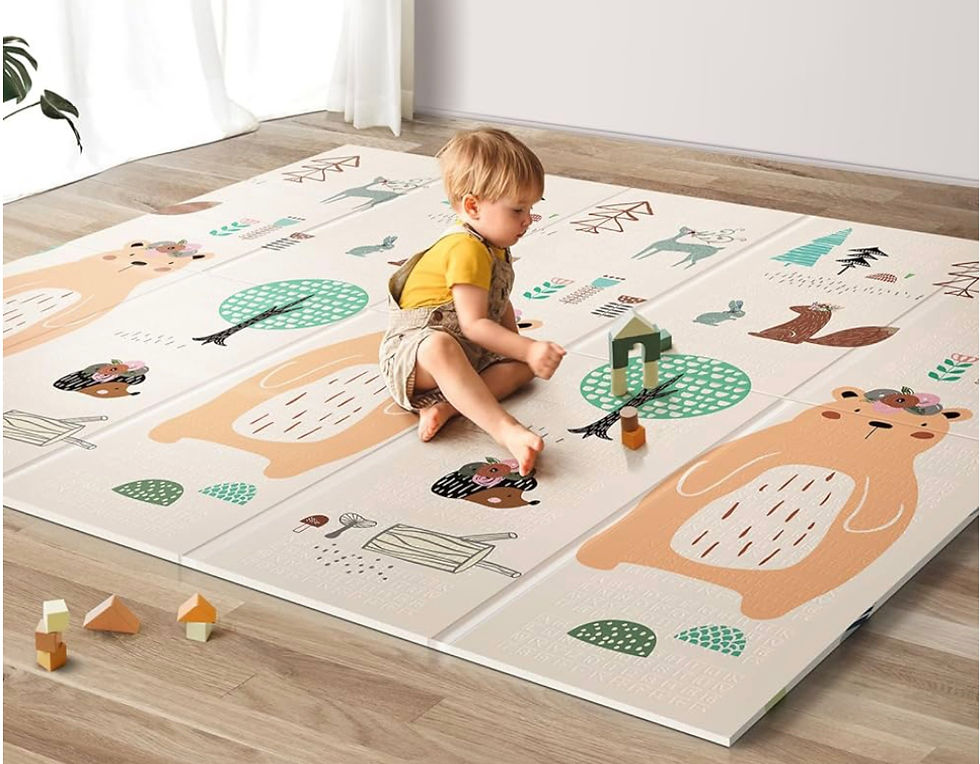
3. Large Play Mat or Quilt in a High-Traffic Area
Sometimes the simplest solution is the best.
Place a large mat or quilt on the floor where life is already happening—near the kitchen, family room, or play space.
Why it works:
Allows full-body movement without confinement
Baby learns to move despite household noise and activity
Promotes visual engagement with siblings and caregivers
PT Tip:
Rotate baby’s position on the mat to encourage looking and rolling both directions.
Best for: Birth–9 months
Post contains affiliate links
4. Babywearing (When You Need Mobility)
While not a floor option, baby-wearing is a developmentally friendly alternative to restrictive containers when movement isn’t possible.
Why it works:
Baby actively uses neck and trunk muscles
Provides rich sensory input (vestibular + proprioceptive)
Keeps baby secure while you move through your day
Important note:
Babywearing should complement, not replace, daily floor time.
Best for: Birth–10 months (with age-appropriate carriers)

5. Crib as a Short-Term Safe Space (Awake Time)
The crib isn’t just for sleep.
For brief periods while baby is awake, a crib can be a safe, flat movement space.
Why it works:
Firm surface encourages pushing, rolling, and reaching
Completely baby-proofed
Useful when you need a few uninterrupted minutes
PT Tip:
Avoid leaving baby awake in the crib for long stretches. Think of this as a short, safe pause—not a primary play area.
Best for: 3–12 months (short durations)
Finally
You do not need to eliminate all containers to support healthy development. The goal is balance.
If a swing or bouncer helps you survive a tough afternoon, that’s okay. Just make sure your baby also gets daily opportunities to move freely on the floor.
Movement builds:
Core strength
Head and trunk control
Coordination for rolling, crawling, and walking
Confidence in their body
And those skills matter far more than any piece of baby gear.
You can meet your baby’s developmental needs and manage a busy life. Choosing container alternatives that allow free movement helps your baby grow strong, curious, and capable—without adding stress to your day.


